
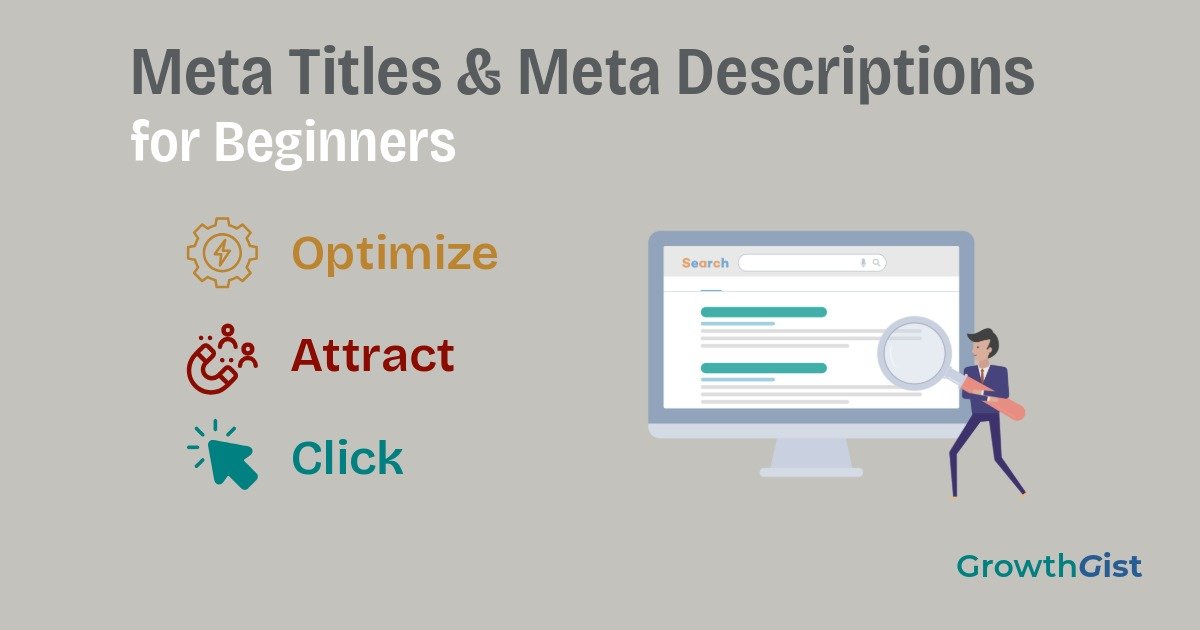
Meta Titles and Meta Descriptions for Beginners are one of the easiest SEO elements to optimize because they help users understand your page before clicking.
Meta titles and meta descriptions are often the first things people notice about your website in search results. Even if your content ranks well, an unclear or unappealing search snippet can reduce the click-through rates on your page.
Many beginners spend hours writing content but overlook these small SEO elements. Learning how to create effective meta titles and descriptions can improve click-through rates, help users understand your content, and make your pages stand out in search results.
In this guide, you’ll learn what meta titles and meta descriptions are, why they matter, and how to write them effectively.
Many website owners don’t pay much attention to these elements until they notice their pages receiving impressions but very few clicks. Taking a few extra minutes to write thoughtful metadata can make your content more appealing before visitors even reach your website.
What Are Meta Titles and Meta Descriptions?
A meta title is the clickable headline that usually appears in search engine results. It gives users and search engines a quick idea of what your page is about.
A meta description is the short summary displayed below the title in search results. Although it isn’t a direct ranking factor, it helps users decide whether your page matches their search intent.
Together, these elements create the search snippet that represents your content before visitors even open your page.
Why Meta Titles and Meta Descriptions for Beginners Matter
Well-written meta tags provide several benefits:
- Improve click-through rates (CTR).
- Help users understand your content quickly.
- Encourage qualified visitors to click.
- Support better user experience.
- Improve search result presentation.
- Increase the chances of attracting the right audience.
Meta Titles and Meta Descriptions for Beginners are worth learning early because they influence how your pages appear in search results. Even if your content is informative, a clear title and description can make it easier for users to understand what your page offers before deciding to click.
How to Write an Effective Meta Title
A strong meta title should clearly describe the page while encouraging users to click.
Follow these best practices:
- Place your primary keyword near the beginning.
- Keep the title clear and descriptive.
- Avoid unnecessary words.
- Make every page title unique.
- Match the user’s search intent.
- Use natural language instead of keyword stuffing.
A helpful title should accurately represent the page instead of creating misleading expectations.
Google also shares additional recommendations for writing effective title links that accurately describe your pages.
How to Write an Effective Meta Description
A good meta description briefly explains what users can expect after clicking your page.
Some useful guidelines include:
- Summarize the page naturally.
- Include the primary keyword where appropriate.
- Explain the value readers will receive.
- Keep the description readable.
- Avoid duplicate descriptions across pages.
- Encourage users with a clear reason to click.
The goal is to help users understand why your page is relevant to their search.
Imagine reading two similar search results. One provides a clear summary of what you’ll learn, while the other offers little useful information. In most cases, users naturally choose the result that gives them more confidence before clicking.
Recommended Length
Although search engines don’t require a fixed character limit, keeping your metadata concise improves readability.
As a general guideline:
| Element | Recommended Length |
|---|---|
| Meta Title | Around 50–60 characters |
| Meta Description | Around 150–160 characters |
Rather than focusing only on character counts, make sure your message remains complete and meaningful.
Common Meta Title Mistakes
Beginners often make these mistakes:
- Writing titles that are too long.
- Creating duplicate page titles.
- Stuffing multiple keywords into one title.
- Using vague or generic wording.
- Making titles unrelated to the page content.
- Forgetting to include the primary keyword.
Simple improvements can make your search snippets much more useful to readers.
Common Meta Description Mistakes
Avoid these common errors:
- Writing duplicate descriptions.
- Leaving the meta description blank.
- Overusing keywords unnaturally.
- Writing descriptions that don’t match the page.
- Making descriptions too short or excessively long.
- Failing to explain the page’s value.
Clear and relevant descriptions improve the overall user experience.
Best Practices for Better Search Snippets
Use these habits whenever you publish a new page:
- Write unique metadata for every page.
- Review your snippet before publishing.
- Keep your messaging clear and specific.
- Match the content with user expectations.
- Update older metadata when content changes.
- Monitor click-through rate to identify opportunities for improvement.
If a page receives plenty of impressions but only a few clicks, reviewing its title and description can be a good place to start. Even small wording improvements may encourage more people to visit your content over time.
Small adjustments can gradually improve how your pages perform in search results.
Do Search Engines Always Use Your Meta Description?
Not always.
Search engines may rewrite your title or description if they believe another version better matches a user’s search query.
Even so, writing accurate and relevant metadata remains worthwhile because your original version is often used when it closely matches search intent.
Google’s guidance explains how meta descriptions can help create useful search snippets, while also noting that Google may generate a different snippet when it better matches the user’s query.
Don’t feel the need to rewrite your metadata too often. Instead, review it occasionally as your content evolves or when performance data suggests there is room for improvement. A well-written snippet should accurately represent the page while remaining useful to readers.
Final Thoughts
Meta titles and meta descriptions may seem like small details, but they play an important role in how users discover and interact with your content. Well-written metadata improves search visibility, encourages more clicks, and helps visitors understand what your page offers before they visit it.
Treat every title and description as an opportunity to make a strong first impression. By writing clear, relevant, and user-focused metadata, you can improve both the search experience and the overall performance of your website over time.
By understanding Meta Titles and Meta Descriptions for Beginners, you’ll be able to create better search snippets for every page you publish.

GrowthGist was founded by Ishwar Solanki to provide clear, practical, and beginner-friendly content on SEO, blogging, AI tools, productivity, website optimization, and digital growth. The platform helps readers build valuable digital skills and strengthen their online presence through actionable insights and reliable information.