
Learning how to start a blog is one of the best ways to share your knowledge, build an online presence, and even create new income opportunities. Whether you want to write about your hobbies, grow a personal brand, or support your business, blogging provides a platform to connect with people around the world.
If you’re wondering how to start a blog for beginners, the process may seem overwhelming at first. There are decisions to make about choosing a niche, selecting a platform, finding a domain name, and publishing your first article. Fortunately, you don’t need advanced technical skills to get started.
This step-by-step guide explains everything you need to know to launch your first blog with confidence.
What Is a Blog?
A blog is a website where individuals or businesses regularly publish articles, guides, tutorials, opinions, or other useful content for readers. Unlike static websites, blogs are updated frequently with new information, helping visitors return for fresh content.
Many successful blogs focus on solving specific problems, answering common questions, or sharing practical experiences. Over time, consistently publishing valuable content helps build trust with readers and increases your website’s visibility in search engines.
Why Start a Blog?
People start blogs for many different reasons. Some enjoy sharing their knowledge, while others use blogging to support their business, build an audience, or create additional income streams.
Before learning how to start a blog, it’s helpful to understand what you want to achieve and who you want to reach.
Starting a blog can help you:
- Share your expertise with others.
- Build your personal or business brand.
- Improve your writing and communication skills.
- Attract visitors through search engines.
- Promote products or services.
- Generate income through advertising, affiliate marketing, or digital products.
Every blogger starts with questions and uncertainty. It’s completely normal if you don’t know everything before launching your website. Most successful blogs improve gradually through practice, experimentation, and consistent publishing rather than getting everything perfect on the first day.
Although blogging takes time and consistency, it can become a valuable long-term asset when you continue publishing helpful content.
How to Start a Blog: Step-by-Step
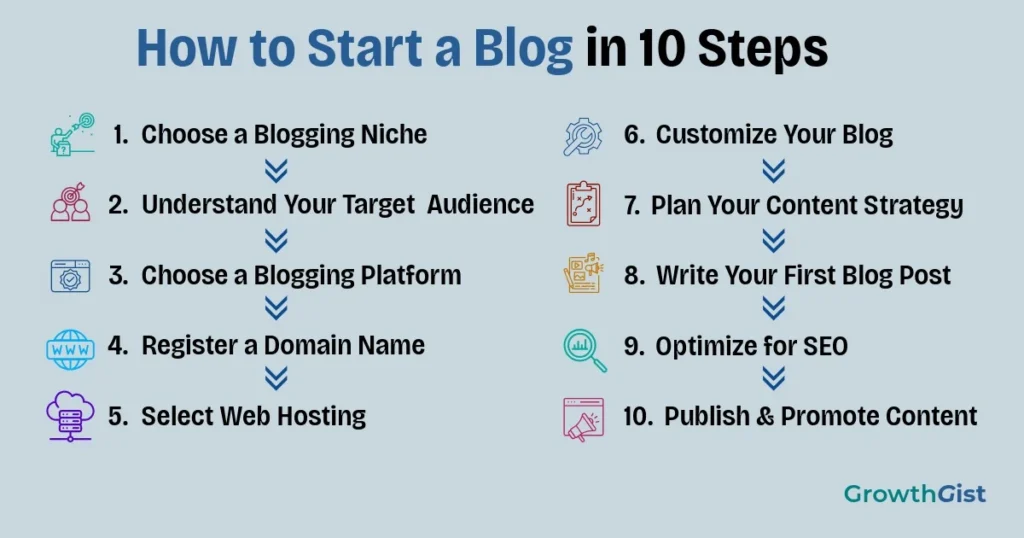
The following 10 steps will help you start a blog successfully, from choosing a niche and setting up your website to publishing, optimizing, and promoting your content.
1. Choose Your Blogging Niche
Your niche is the main topic your blog focuses on. Choosing a specific niche helps attract the right audience and makes it easier to create relevant content consistently.
Popular blogging niches include:
- Digital Marketing
- SEO
- Personal Finance
- Technology
- Health and Fitness
- Education
- Travel
- Food
- Lifestyle
Select a topic you genuinely enjoy and can continue writing about over time. A clear niche also helps search engines better understand your website.
2. Understand Your Target Audience
Before writing your first article, think about who will read your content.
Ask yourself:
- What problems are they trying to solve?
- What questions do they frequently ask?
- What level of knowledge do they have?
- What type of content would be most useful?
Understanding your audience helps you create content that answers real questions instead of simply publishing random articles.
3. Choose a Blogging Platform
A blogging platform allows you to create, publish, and manage your content.
Some popular platforms include:
- WordPress.org
- Blogger
- Wix
- Squarespace
For beginners who want long-term flexibility, WordPress is widely used because it offers thousands of themes, plugins, and customization options while giving you full control over your website.
4. Register a Domain Name
Your domain name is your website’s online address.
When choosing a domain name:
- Keep it short and memorable.
- Make it easy to spell.
- Avoid unnecessary numbers or special characters.
- Choose a name related to your niche whenever possible.
A simple and professional domain helps visitors remember your website.
Before registering a domain name, you can check whether it’s available using the ICANN Registration Data Lookup.
5. Select Reliable Web Hosting
Web hosting stores your website files and makes your blog available online.
When comparing hosting providers, consider factors such as:
- Speed
- Reliability
- Security
- Customer support
- Daily backups
- Scalability
Choosing reliable hosting creates a better experience for both visitors and search engines.
6. Customize Your Blog
Once your website is set up, personalize its appearance.
Basic customization includes:
- Selecting a clean theme
- Uploading your logo
- Creating navigation menus
- Setting your homepage
- Adding important pages such as About, Contact, Privacy Policy, and Disclaimer
A simple layout helps visitors find information more easily.
7. Plan Your Content Strategy
Publishing random articles rarely produces consistent results. Instead, create a content plan based on topics your audience is actively searching for.
A simple content strategy includes:
- Identifying your main topics.
- Researching relevant keywords.
- Creating helpful articles consistently.
- Updating older content when necessary.
Many beginners feel they need dozens of article ideas before publishing their blog. In reality, starting with a handful of well-researched topics is often enough. As you learn more about your audience and their interests, new content ideas will naturally develop over time.
Planning ahead keeps your blog organized and supports long-term growth.
8. Write Your First Blog Post
Focus on creating content that answers a specific question or solves a particular problem.
A beginner-friendly blog post usually includes:
- A clear introduction.
- Helpful headings.
- Practical examples.
- Easy-to-read paragraphs.
- A simple conclusion.
Writing content that is both helpful and optimized for readers requires good SEO copywriting techniques.
Rather than trying to publish perfect content immediately, concentrate on making your article genuinely useful for readers.
9. Optimize Your Blog for Search Engines
Publishing content is only one part of blogging. Optimizing your blog helps search engines understand your pages and display them for relevant searches.
Some basic SEO practices include:
- Writing descriptive page titles.
- Creating helpful meta descriptions.
- Using relevant keywords naturally.
- Adding internal links.
- Optimizing images.
- Improving website performance.
Small improvements made consistently often produce better long-term results than trying to optimize everything at once.
Following the recommendations in Google Search Essentials can also help ensure your website follows Google’s best practices for search.
10. Publish and Promote Your Content
After publishing an article, share it through appropriate channels.
Publishing your article is only the beginning of its journey. Sharing your content through appropriate channels helps more people discover it, while also giving you valuable feedback about what your audience finds useful. Over time, this feedback can help you create even better content.
You can promote your content using:
- Social media
- Email newsletters
- Online communities
- Professional networking platforms
Promotion helps your content reach more people while giving search engines additional signals that your content is valuable.
Tools like Google Analytics help you understand how visitors interact with your content and identify opportunities to improve your blog.
Common Blogging Mistakes to Avoid
Many beginners make similar mistakes when starting a blog.
Avoid these common problems:
- Choosing a niche that is too broad.
- Publishing content without understanding your audience.
- Ignoring keyword research.
- Writing only for search engines instead of readers.
- Publishing inconsistently.
- Neglecting website performance.
- Expecting immediate results.
Learning from these mistakes early helps you build a stronger foundation.
Best Practices for Successful Blogging
Successful blogs are built gradually through consistent effort.
Keep these best practices in mind:
- Publish helpful, original content.
- Focus on solving readers’ problems.
- Maintain a regular publishing schedule.
- Improve older articles over time.
- Monitor your website’s performance.
- Continue learning and adapting your strategy.
Don’t compare your progress with blogs that have been growing for years. Every article you publish teaches you something new, whether it’s improving your writing, understanding your audience, or organizing your content more effectively. Small improvements made consistently often lead to significant results over time.
🚀 Quick Tip
Your first blog doesn’t have to be perfect—it just needs to be helpful. Focus on publishing consistently, learning from your audience, and improving your content over time. Small, consistent efforts often lead to lasting results.
Final Thoughts
Now that you know how to start a blog, the next step is to put these ideas into practice and begin building your website. Choosing a clear niche, understanding your audience, publishing valuable content, and continuously improving your website all contribute to long-term success.
Remember that every successful blog began with a single post. Stay consistent, focus on helping your readers, and keep learning as your blog grows. Over time, those small, consistent efforts can develop into a website that attracts visitors, builds trust, and creates meaningful opportunities.
Building a successful blog is a long-term process, and every valuable article you publish contributes to your website’s growth.

GrowthGist was founded by Ishwar Solanki to provide clear, practical, and beginner-friendly content on SEO, blogging, AI tools, productivity, website optimization, and digital growth. The platform helps readers build valuable digital skills and strengthen their online presence through actionable insights and reliable information.