
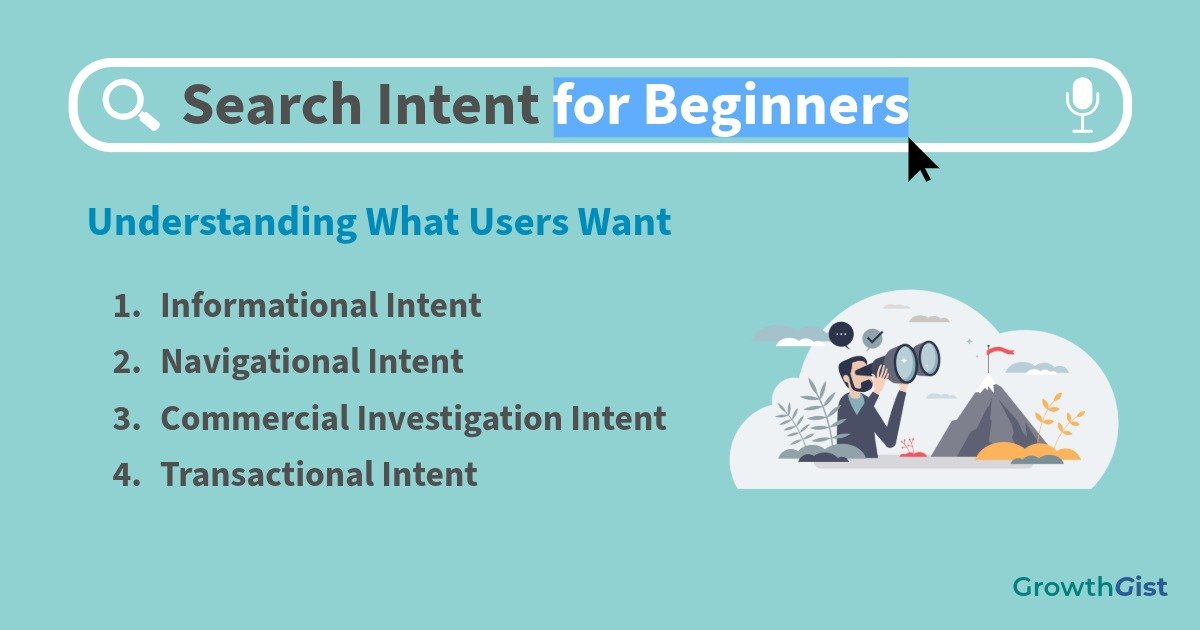
Search intent for Beginners is one of the most important concepts in SEO to understand, yet many beginners overlook it when creating content.
Many website owners spend hours researching keywords and writing content, only to wonder why their pages never reach the top search results. In many cases, the problem is not the keyword itself but the intent behind the search. If your content doesn’t match what users are actually looking for, even well-written articles can struggle to rank and attract traffic.
Even if you choose the right keywords and optimize your pages, your content may struggle to rank if it does not match what users are actually looking for.
Understanding search intent helps you create content that satisfies user needs, improves engagement, and increases your chances of ranking higher in search results.
Search intent for beginners can seem confusing at first, but understanding it helps create content that better matches user needs.
If you’re new to SEO, start with our guide on What Is SEO? A Complete Beginner’s Guide (2026) to understand the fundamentals before diving deeper into search intent. According to Google Search Central, creating helpful content that meets user needs should always be a primary goal of SEO.
Why Search Intent Matters
Search engines aim to provide the most relevant results for every search query.
When someone searches online, they usually have a specific goal in mind. Search intent refers to the reason behind that search.
For example, a person searching for:
what is SEO
is likely looking for information and explanations.
Someone searching for:
best SEO tools
may be comparing options before making a decision.
Meanwhile, a user searching for:
buy SEO course
is often ready to take action.
Understanding these differences helps you create content that better matches user expectations.
When your content aligns with search intent, visitors are more likely to stay on your website, engage with your content, and explore additional pages.
For anyone learning SEO, understanding Search Intent for Beginners is often the difference between creating content that ranks and content that gets ignored.
The Four Main Types of Search Intent
Most searches fall into four primary categories.
1. Informational Intent
Informational intent occurs when users want to learn something.
Examples include:
- What is SEO?
- How does keyword research work?
- SEO tips for beginners
- How to improve website rankings
Users with informational intent are looking for answers, guides, tutorials, or explanations.
Blog posts and educational content typically perform well for these searches.
2. Navigational Intent
Navigational intent occurs when users are trying to find a specific website, page, or brand.
Examples include:
- Google Search Console
- YouTube Studio
- WordPress login
- GrowthGist SEO guides
In these cases, users already know where they want to go.
Search engines simply help them reach the desired destination.
3. Commercial Investigation Intent
Commercial investigation intent occurs when users are researching products, services, or solutions before making a decision.
Examples include:
- Best SEO tools
- Ahrefs vs SEMrush
- SEO plugins for WordPress
- Best keyword research tools
These users are comparing options and gathering information before committing to a purchase. Review articles, comparisons, and buying guides often target this type of search intent.
4. Transactional Intent
Transactional intent occurs when users are ready to take action.
Examples include:
- Buy SEO course
- Hire SEO consultant
- Download SEO plugin
- Purchase web hosting
These searches often indicate strong buying intent.
Landing pages and product pages are usually best suited for transactional queries.
How to Identify Search Intent for Beginners
Before creating content, spend a few minutes analyzing the search results.
Ask yourself:
- What type of content is ranking?
- Are the results blog posts or product pages?
- Are users looking for information or solutions?
- What questions are being answered?
A simple way to identify intent is by searching your target keyword and reviewing the first page of results.
For example:
what is SEO
usually returns educational articles.
However:
best SEO software
often displays comparison guides and reviews.
The search results themselves provide valuable clues about user expectations.
How Search Intent Affects SEO
Search intent plays a major role in modern SEO.
Search engines analyze user behavior to determine whether a page satisfies a query.
For example, if users searching for:
keyword research for beginners
expect a detailed tutorial, a short sales page is unlikely to perform well.
This is why understanding user needs is more important than simply targeting keywords.
Keyword research and search intent work together to help create content that answers user questions effectively.
If you’re unfamiliar with keyword research, see our guide on Keyword Research for Beginners: 10 Easy Steps.
Creating Content That Matches Search Intent
After identifying intent, create content that aligns with what users want.
For informational searches:
- Explain concepts clearly
- Provide examples
- Answer common questions
- Use beginner-friendly language
For commercial searches:
- Compare options
- Discuss pros and cons
- Include recommendations
- Help users make decisions
Think about your own search habits. If you search for “best laptops for students,” you’re probably looking for comparisons and recommendations, not a product checkout page. On the other hand, if you search for a specific laptop model and click a store listing, you’re likely closer to making a purchase. Understanding this difference helps you create content that aligns with user expectations and improves engagement.
This is why Search Intent for Beginners should be considered before writing any article, landing page, or product description.
SEO content writing becomes more effective when search intent guides the content creation process.
Learn more in our article on SEO Content Writing for Beginners: A Simple Guide (2026).
Search Intent and On-Page SEO
Matching search intent is only part of the process.
Your content should also be properly optimized.
Important on-page SEO elements include:
- Title tags
- Meta descriptions
- Headings
- Internal links
- Image alt text
These elements help search engines understand your content while improving the user experience.
For a detailed explanation, read our guide on On-Page SEO for Beginners: A Simple Step-by-Step Guide.
Technical SEO Still Matters
Even if your content perfectly matches search intent, technical issues can limit performance.
Factors such as:
- Page speed
- Mobile usability
- HTTPS security
- Crawlability
- Site structure
can influence rankings and user experience.
A fast, accessible website makes it easier for users to find and consume your content.
Learn more in our Technical SEO for Beginners: A Simple Guide.
Common Search Intent Mistakes
Many beginners make mistakes when trying to rank content.
Common issues include:
Targeting the Wrong Intent
Creating a sales page for an informational keyword often leads to poor engagement.
Ignoring User Expectations
Users expect content that solves their problems quickly and clearly.
Focusing Only on Keywords
Keywords are important, but intent should always guide content creation.
Publishing Thin Content
Low-quality content rarely satisfies user needs.
Not Reviewing Search Results
Failing to analyze current rankings can result in content that does not align with search intent.
Many of these issues are discussed in our article on 10 SEO Mistakes Beginners Should Avoid (2026).
Best Practices for Matching Search Intent
To improve SEO performance:
- Research keywords carefully.
- Analyze search results before writing.
- Understand user expectations.
- Create comprehensive content.
- Use clear headings and structure.
- Answer common questions.
- Update content regularly.
- Monitor performance over time.
Following these practices can improve both rankings and user satisfaction.
You can also explore our 10 SEO Tips for Beginners: Improve Rankings guide for additional SEO recommendations.
Useful Tools for Understanding Search Intent
Several tools can help you better understand user behavior and search intent.
Google Search Central provides official guidance on creating helpful content and improving search visibility.
You can also review Google’s Search Quality Evaluator Guidelines, which offer insights into how content quality and relevance are evaluated. These resources can help you create content that better aligns with user expectations.
Tools such as Google Trends can help identify popular topics, seasonal trends, and changing search behavior.
Final Thoughts
Search intent is the foundation of successful SEO. Understanding why users search helps you create content that provides relevant answers and a better overall experience.
Instead of focusing only on keywords, concentrate on understanding the goals behind each search query. When your content matches user expectations, it becomes easier to attract visitors, improve engagement, and build long-term organic traffic.
Search intent may seem like a small SEO concept, but it can have a significant impact on your results. Before creating any new page, take a moment to ask what the user truly wants to achieve. When your content answers that need clearly and effectively, visitors are more likely to stay longer, trust your website, and return in the future.
As you continue learning SEO, remember that rankings are often the result of consistently creating helpful content that satisfies search intent. By combining keyword research, quality content, on-page optimization, and technical SEO, beginners can build a strong foundation for long-term growth.
By mastering search intent for beginners, you can create more useful content and improve your SEO results over time.

GrowthGist was founded by Ishwar Solanki to provide clear, practical, and beginner-friendly content on SEO, blogging, AI tools, productivity, website optimization, and digital growth. The platform helps readers build valuable digital skills and strengthen their online presence through actionable insights and reliable information.