
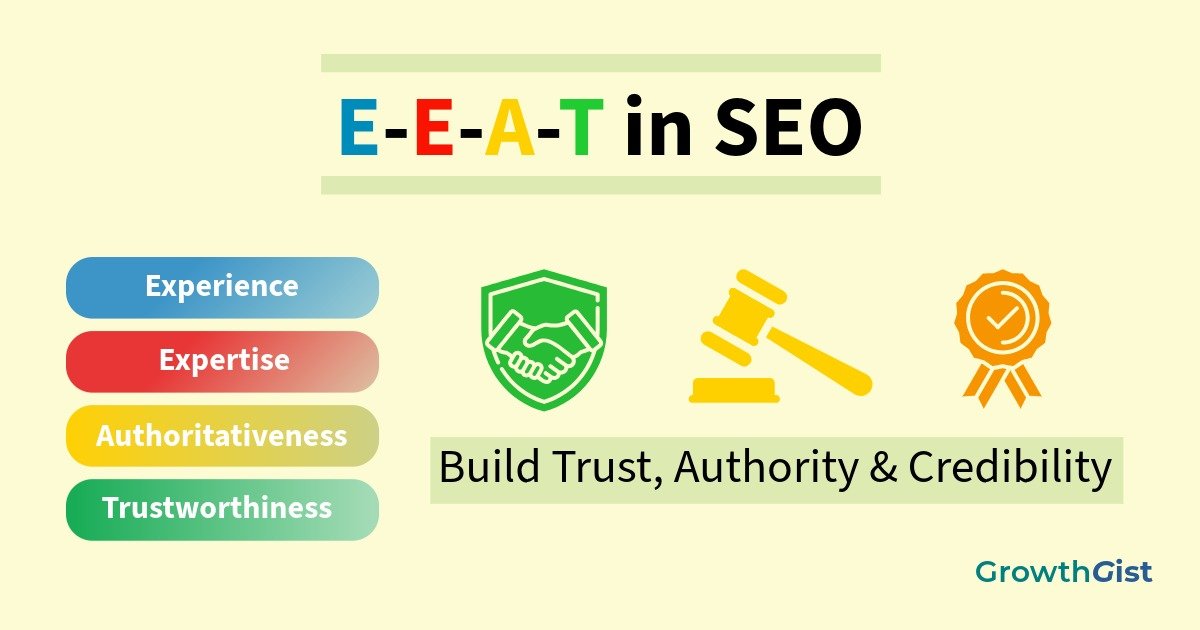
E-E-A-T in SEO is a framework used by Google to evaluate content quality, credibility, and trustworthiness.
If you’ve been learning SEO, you may have come across the term E-E-A-T. While it is not a direct ranking factor, E-E-A-T plays an important role in how search engines evaluate content quality and trustworthiness.
Google wants to provide users with accurate, helpful, and reliable information. As a result, websites that demonstrate strong experience, expertise, authoritativeness, and trustworthiness are more likely to earn credibility over time.
In this beginner-friendly guide, you’ll learn what E-E-A-T means, why it matters, and how you can improve it on your website in 2026.
Many website owners focus primarily on rankings, keywords, and traffic. While those factors are important, users often evaluate a website differently. People want to know whether information is reliable, whether the source can be trusted, and whether the content genuinely helps solve their problems. E-E-A-T encourages website owners to think beyond search visibility and focus on building confidence among readers.
What Is E-E-A-T in SEO?
E-E-A-T stands for:
- Experience
- Expertise
- Authoritativeness
- Trustworthiness
These concepts help Google evaluate the quality of content and the credibility of the people or organizations behind it.
The first “E” for Experience was added to emphasize the importance of first-hand knowledge and real-world experience.
Together, these four elements help search engines determine whether content is helpful and reliable for users.
Why Does E-E-A-T Matter?
Search engines aim to provide the best possible results for every search query.
When multiple pages cover the same topic, E-E-A-T can help distinguish higher-quality content from less reliable information.
In competitive industries, users frequently have multiple websites to choose from. When content appears similar, trust can become a deciding factor. A website that demonstrates credibility, transparency, and a strong reputation often has a better chance of earning repeat visitors and long-term audience loyalty.
Strong E-E-A-T can help:
- Build user trust
- Improve content credibility
- Strengthen brand reputation
- Increase audience confidence
- Support long-term SEO success
For website owners, E-E-A-T in SEO is about creating content that genuinely helps users while demonstrating knowledge and trustworthiness.
Google’s Search Essentials emphasize creating helpful, people-first content.
Understanding Experience
Experience refers to first-hand involvement with a topic.
For example, a person who has used a product, visited a location, or completed a process can often provide insights that go beyond general information.
Content that includes real examples, practical observations, and personal knowledge can demonstrate experience.
This does not mean every article must be based on personal stories, but genuine experience can improve content quality and usefulness.
Understanding Expertise
Expertise refers to knowledge and skill in a particular subject.
Different topics require different levels of expertise.
For example:
- Medical content often requires professional expertise.
- Financial advice requires accuracy and knowledge.
- Hobby-related topics may rely on practical experience.
Demonstrating expertise involves providing accurate information, clear explanations, and helpful guidance.
The goal is to create content that users can trust and learn from.
Understanding Authoritativeness
Authoritativeness relates to your reputation within a topic or industry.
Websites often build authority through:
- High-quality content
- Brand recognition
- Positive mentions
- Backlinks from reputable websites
- Industry references
Authority develops gradually over time. Building authority is also an important goal of off-page SEO, which focuses on reputation and trust signals outside your website.
Publishing useful content consistently can help strengthen your reputation and increase recognition within your niche.
Understanding Trustworthiness
Trustworthiness is often considered the most important part of E-E-A-T in SEO.
Users need confidence that the information they are reading is accurate and reliable.
Trust can be improved by:
- Providing accurate information
- Maintaining transparency
- Including contact information
- Using secure website connections
- Updating outdated content
A trustworthy website focuses on helping users rather than misleading them.
E-E-A-T and Content Quality
E-E-A-T is closely connected to content quality.
Helpful content should:
- Answer user questions clearly
- Demonstrate knowledge
- Provide accurate information
- Satisfy search intent
- Offer practical value
Content created solely for rankings often struggles to build trust with users.
Instead, focus on creating content that solves problems and provides useful insights.
Google’s helpful content guidance encourages creators to focus on content that benefits users first.
How to Improve E-E-A-T on Your Website
Improving E-E-A-T takes time, but several strategies can help. Focus on creating helpful content that answers user questions and solves real problems. When appropriate, share real experience and practical examples that demonstrate first-hand knowledge.
You can also strengthen E-E-A-T in SEO by building author profiles, earning quality backlinks, and keeping information updated. In addition, trust can be improved through HTTPS security, clear contact information, and transparent website policies.
Common E-E-A-T Mistakes
Beginners often make several mistakes that can weaken E-E-A-T by publishing low-quality content, making unsupported claims, ignoring user experience, or prioritizing rankings over providing value. These practices can reduce credibility and make it harder for users to trust the information on a website.
Does E-E-A-T Directly Affect Rankings?
E-E-A-T is not a direct ranking factor like page speed or mobile usability.
However, many factors associated with E-E-A-T can influence SEO performance. Understanding how search engines work can help explain why trust, authority, and content quality remain important for long-term visibility.
High-quality content, strong reputation, user trust, and authoritative backlinks often contribute to better long-term visibility.
This is why E-E-A-T remains an important concept for website owners and content creators.
E-E-A-T and the Future of SEO
As search engines continue improving, trust and content quality are becoming increasingly important.
Websites that consistently publish useful, accurate, and reliable content are more likely to build long-term credibility.
Rather than focusing on shortcuts, website owners should concentrate on providing genuine value to their audience.
This approach supports sustainable growth and aligns with modern SEO best practices.
Building strong E-E-A-T in SEO is usually a gradual process rather than a one-time task. It develops through consistent publishing, accurate information, positive user experiences, and ongoing improvements to content quality. Small efforts made regularly can contribute to a stronger reputation over time and help establish a more trustworthy online presence.
Final Thoughts
E-E-A-T in SEO stands for Experience, Expertise, Authoritativeness, and Trustworthiness. These principles help search engines evaluate content quality and credibility.
While E-E-A-T is not a direct ranking factor, it plays an important role in creating content that users trust and find valuable.
By focusing on helpful content, demonstrating knowledge, building authority, and maintaining trust, beginners can create a stronger foundation for long-term SEO success in 2026.

GrowthGist was founded by Ishwar Solanki to provide clear, practical, and beginner-friendly content on SEO, blogging, AI tools, productivity, website optimization, and digital growth. The platform helps readers build valuable digital skills and strengthen their online presence through actionable insights and reliable information.