
Search engines help users find information on the internet within seconds. Whether someone is searching for a product, a tutorial, or an answer to a question, search engines connect them with relevant web pages.
For website owners and bloggers, understanding how search engines work is important because it helps improve visibility and attract organic traffic. While search engine algorithms are complex, the basic process can be understood through three main stages: crawling, indexing, and ranking.
In this beginner-friendly guide, you’ll learn how search engines discover, store, and rank web pages.
What Are Search Engines?
Search engines are online tools that help users find information across the web. Popular examples include Google, Bing, and DuckDuckGo.
When a user enters a search query, the search engine scans its database and displays the most relevant search results based on hundreds of ranking factors.
Search engines aim to provide users with accurate, helpful, and trustworthy information as quickly as possible.
Why Understanding Search Engines Matters
When I first started learning SEO, I assumed that publishing content was enough to get visitors from Google. However, I quickly realized that search engines need to discover, understand, and trust a page before it can appear in search results. Understanding the basics of crawling, indexing, and ranking made SEO recommendations much easier to understand and apply.
Many beginners focus only on creating content without understanding how search engines process websites.
Learning how search engines work can help you:
- Create content that is easier to discover
- Improve website visibility
- Fix technical issues
- Understand SEO recommendations
- Increase organic traffic over time
If you’re completely new to SEO, start with our guide on What Is SEO? A Complete Beginner’s Guide before diving deeper into search engine mechanics.
How Search Engines Work: The Three Main Stages
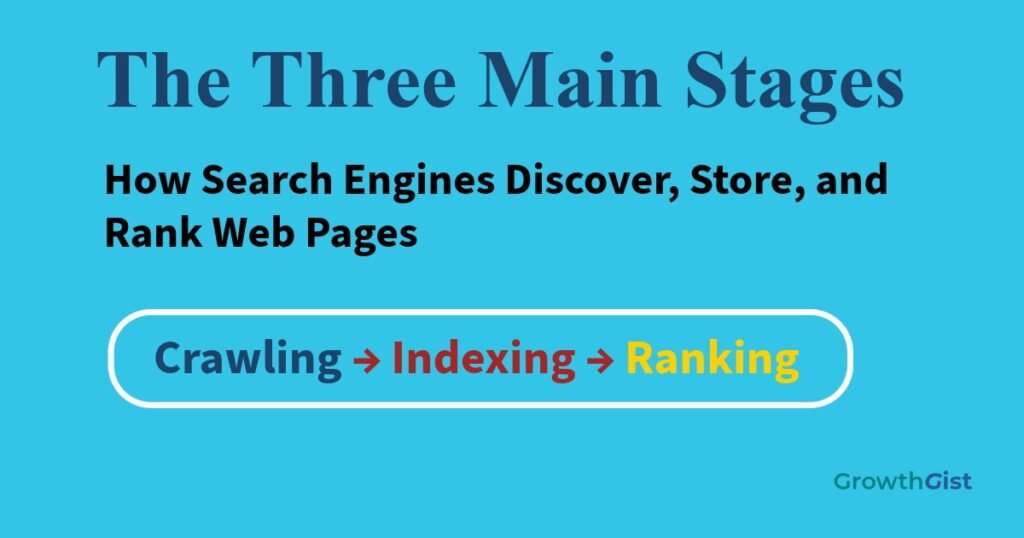
Search engines generally operate through three stages: crawling, indexing, and ranking.
Every page must be crawled and indexed before it can appear in search results.
According to Google Search Central Documentation, Google uses automated systems to discover, understand, and organize content across the web.
Crawling
Crawling is the process of discovering web pages.
Search engines use automated programs called crawlers or bots to explore websites. These bots follow links from one page to another and collect information about web content.
Indexing
Once a page is discovered, search engines analyze and store its information in a massive database called an index.
Only indexed pages can appear in search results.
Ranking
When a user performs a search, the search engine evaluates indexed pages and displays the most relevant results.
This ranking process happens in a fraction of a second.
What Is Crawling?
Crawling is the first step in the search engine process.
Search engine bots continuously scan the internet looking for new and updated content. They discover pages through:
- Internal links
- External links
- XML sitemaps
- Previously indexed pages
A website with a clear structure and strong internal linking is generally easier for search engines to crawl.
For example, linking related articles together helps search engine bots discover more pages on your website.
You can learn more about site structure in our guide on On-Page SEO for Beginners: A Simple Step-by-Step Guide.
What Is Indexing?
A common mistake beginners make is assuming that every published page automatically appears on Google. In reality, a page must first be discovered and indexed before it has a chance to rank. This is why checking indexing status in Google Search Console is often one of the first troubleshooting steps when a page isn’t receiving search traffic.
After crawling a page, search engines decide whether it should be added to their index.
During indexing, search engines analyze:
- Page content
- Titles and headings
- Images
- Internal links
- Keywords
- Overall page quality
Pages that provide useful and unique information are more likely to be indexed successfully.
Ranking determines which pages users see first when they perform a search.
Reasons Pages May Not Be Indexed
Sometimes pages fail to enter Google’s index.
Common reasons include:
- Thin or low-quality content
- Duplicate content
- Noindex tags
- Crawl errors
- Blocked resources
Monitoring indexing status regularly can help identify problems before they affect traffic.
Website owners can use Google Search Console Help resources to understand indexing reports, sitemap submissions, and URL inspection tools.
What Is Ranking?
Ranking is the process of determining which pages appear first in search results.
Search engines evaluate numerous signals to decide which page best answers a user’s query.
Understanding how search engines work can help you create content that better matches user needs and improves ranking potential.
Some important ranking factors include:
Relevance
The content must closely match the user’s search query.
Content Quality
Helpful, accurate, and well-structured content tends to perform better.
User Experience
Fast-loading pages, mobile-friendly designs, and clear navigation improve user satisfaction.
Authority
Websites that demonstrate expertise and earn trust are often rewarded with stronger rankings.
Factors That Influence Rankings
Many SEO factors contribute to search visibility.
Keywords
Keywords help search engines understand what a page is about.
Proper keyword research allows you to create content that aligns with user searches.
For a complete walkthrough, see Keyword Research for Beginners: 10 Easy Steps.
Search Intent
Search engines prioritize content that satisfies user intent.
For example, someone searching for “how to start a blog” expects a guide rather than a product page.
Understanding intent helps create more relevant content.
Learn more in Search Intent for Beginners: A Simple Guide.
Technical SEO
Technical SEO ensures search engines can access, crawl, and understand your website efficiently.
Important technical factors include:
- Site speed
- Mobile friendliness
- Secure HTTPS connections
- Crawlability
Read more in Technical SEO for Beginners: A Simple Guide.
Content Quality
High-quality content remains one of the strongest ranking signals.
Well-written articles that provide genuine value are more likely to earn visibility and engagement.
Creating helpful and well-structured content improves the chances of ranking because search engines aim to provide users with valuable information. Learn more in our guide on SEO Content Writing for Beginners: A Simple Guide (2026).
Common Crawling and Indexing Problems
Many websites struggle with visibility because of technical issues.
Common problems include:
- Broken internal links
- Slow page speed
- Duplicate content
- Missing XML sitemaps
- Incorrect robots.txt settings
Even excellent content may fail to rank if search engines cannot properly crawl or index it.
Regular website audits help identify and fix these issues.
Many indexing and ranking issues occur because of avoidable errors such as poor site structure, thin content, or technical problems. For additional guidance, see 10 SEO Mistakes Beginners Should Avoid (2026).
Tools to Monitor Search Engine Performance
Several tools can help website owners understand how search engines interact with their websites.
Google Search Console
Google Search Console provides information about:
- Indexing status
- Search performance
- Crawl issues
- Sitemap submissions
It is one of the most valuable free SEO tools available.
Google Analytics
Google Analytics helps track:
- Website traffic
- User behavior
- Popular content
- Conversion data
Together, these tools provide valuable insights into website performance.
For additional tools, see our guide on SEO Tools for Beginners: Essential Tools to Improve SEO.
Beginner Tips for Better Visibility
If you’re just getting started, focus on the fundamentals:
- Create helpful content consistently
- Use proper keyword research
- Improve internal linking
- Optimize page titles and headings
- Monitor Search Console regularly
- Ensure pages load quickly
- Match content to user intent
Small improvements made consistently often produce better results than chasing quick SEO tricks.
For additional guidance, check out 10 SEO Tips for Beginners: Improve Rankings.
Many website owners spend a lot of time looking for advanced SEO tactics, but the biggest improvements often come from getting the basics right. A well-structured website, helpful content, and a clear understanding of user needs can go a long way. Search engines continue to evolve, but their goal remains the same: providing users with the most useful answer to their questions.
Successful SEO begins with understanding how search engines discover, organize, and rank content.
When I first started learning SEO, terms like crawling, indexing, and ranking sounded complicated. Over time, I realized that understanding these basics made it much easier to identify why some pages performed well while others struggled to gain visibility. Even today, these fundamentals remain the foundation of successful SEO.
Final Thoughts
Search engines work through three primary stages: crawling, indexing, and ranking. Understanding these processes helps website owners create content that is easier for search engines to discover and display.
Successful SEO is not about manipulating algorithms. Instead, it focuses on creating valuable content, improving user experience, and making websites accessible to search engines.
By understanding how search engines work, you can make smarter SEO decisions, improve visibility, and build sustainable organic traffic over time.

GrowthGist was founded by Ishwar Solanki to provide clear, practical, and beginner-friendly content on SEO, blogging, AI tools, productivity, website optimization, and digital growth. The platform helps readers build valuable digital skills and strengthen their online presence through actionable insights and reliable information.