
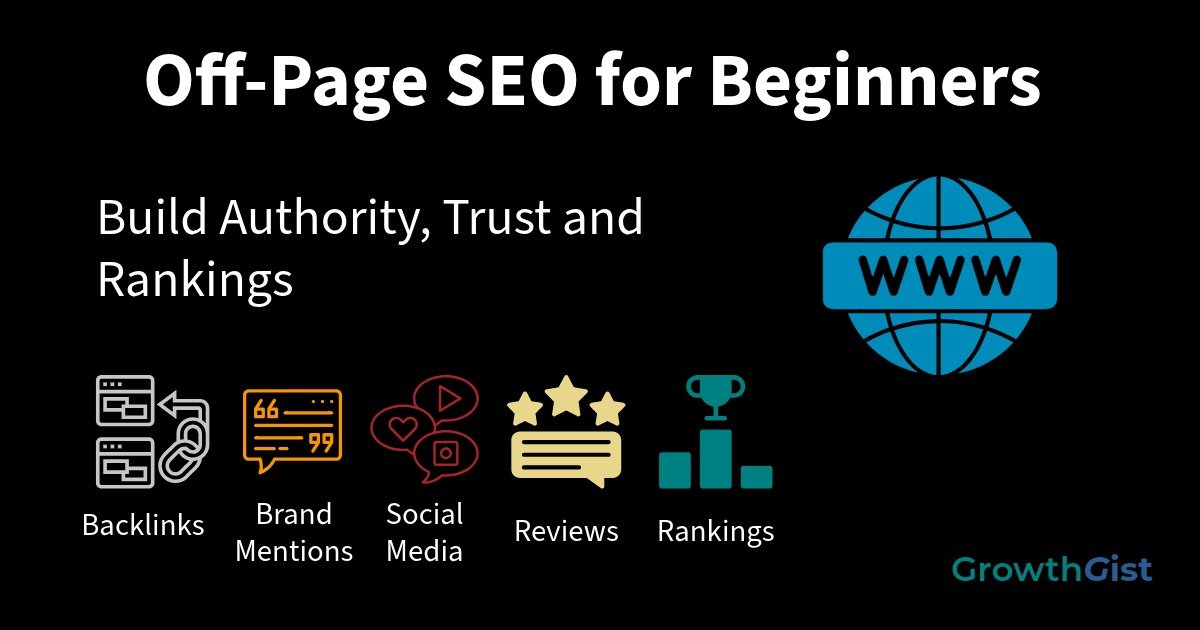
Off-page SEO for beginners can seem confusing at first, especially when most SEO advice focuses on changes made directly on a website.
If you’ve already learned about keyword research, on-page SEO, technical SEO, and link building, the next step is understanding off-page SEO.
Many beginners focus only on optimizing their websites. However, search engines also consider signals from outside your website when determining rankings. This is where off-page SEO becomes important.
When many people start learning SEO, they spend most of their time improving content, optimizing titles, and fixing technical issues on their websites. While those activities are important, rankings are often influenced by factors that happen beyond your website. This is one reason why two websites with similar content can achieve very different results in search engines.
Off-page SEO is not about finding shortcuts or manipulating rankings. Instead, it focuses on building trust, visibility, and credibility across the web. As more people discover, mention, and reference your content, your website gradually develops a stronger reputation that can support long-term SEO growth.
In this guide, you’ll learn what off-page SEO is, why it matters, and the best off-page SEO strategies beginners can use in 2026.
Off-Page SEO for Beginners: What Is It?
Off-page SEO refers to actions taken outside your website to improve its visibility, credibility, and rankings in search engines.
Unlike on-page SEO, which focuses on optimizing content and website elements, off-page SEO helps build your site’s reputation across the internet.
Examples of off-page SEO activities include:
- Building backlinks
- Brand mentions
- Social media marketing
- Guest posting
- Online reputation management
These signals help search engines understand whether your website is trustworthy and authoritative.
Google’s Search Essentials emphasize creating helpful, trustworthy content and building a strong online presence.
Why Is Off-Page SEO Important?
Search engines aim to provide users with reliable and valuable information.
Even if your content is excellent, it can be difficult to rank if your website lacks authority.
Off-page SEO helps:
- Increase website authority
- Improve search rankings
- Generate referral traffic
- Build brand awareness
- Strengthen trust and credibility
Learning off-page SEO for beginners helps you understand how search engines evaluate a website’s popularity and credibility across the web.
Think of off-page SEO as your website’s reputation in the online world.
How Off-Page SEO Works
Search engines evaluate many factors beyond your website itself.
For example, when reputable websites link to your content, it signals that your information is useful and trustworthy.
Similarly, when people mention your brand on social media, forums, or other websites, search engines gain additional signals about your online presence.
The stronger your reputation, the easier it becomes to compete in search results.
Backlinks: The Foundation of Off-Page SEO
Backlinks remain one of the most important parts of off-page SEO.
A backlink is a link from another website pointing to your website.
Quality backlinks can:
- Improve authority
- Increase visibility
- Drive referral traffic
- Help search engines discover content
However, quality matters far more than quantity.
A few relevant backlinks from trusted websites are often more valuable than hundreds of low-quality links.
Social Media and Off-Page SEO
Social media links are not usually direct ranking factors, but they can still support your SEO efforts.
Benefits of social media include:
- Increased content visibility
- More website traffic
- Greater brand awareness
- Higher chances of earning backlinks
Sharing useful content regularly can help more people discover your website.
Brand Mentions Matter
A brand mention occurs when someone talks about your website, business, or brand online.
These mentions may or may not include a backlink.
Examples include:
- Blog posts
- Social media posts
- Forums
- Online communities
- News websites
Consistent brand mentions can help strengthen your online presence and credibility.
Guest Posting for Beginners
Guest posting involves writing content for another website in your niche.
When done correctly, guest posting can:
- Reach new audiences
- Build relationships
- Earn backlinks
- Increase brand awareness
Focus on quality websites that provide genuine value to their readers.
Avoid spammy guest-posting networks designed solely for link building.
Online Reviews and Reputation
For businesses and brands, reviews can influence trust and visibility.
Positive reviews can:
- Improve credibility
- Increase user confidence
- Strengthen brand reputation
Encourage genuine reviews and always respond professionally to feedback.
Building trust takes time, but it contributes to long-term growth.
Common Off-Page SEO Mistakes
Beginners often make mistakes while trying to improve rankings quickly.
Buying Backlinks
Purchasing backlinks violates Google’s guidelines and may lead to penalties.
Using Spammy Link Schemes
Artificial link-building tactics rarely provide sustainable results.
Ignoring Content Quality
Even strong off-page SEO cannot compensate for poor content.
Focusing Only on Rankings
Off-page SEO should also help build authority, trust, and brand recognition.
Best Off-Page SEO Practices for 2026
Follow these principles:
- Create valuable content
- Earn backlinks naturally
- Build relationships in your niche
- Promote content through social media
- Focus on quality over quantity
- Strengthen your brand presence
- Avoid manipulative SEO tactics
These practices support long-term growth and align with Google Search Central documentation.
Off-Page SEO vs On-Page SEO
Many beginners wonder whether on-page SEO or off-page SEO is more important.
The truth is that both work together.
On-page SEO helps search engines understand your content, while off-page SEO helps establish trust and authority.
A successful SEO strategy requires both elements.
Final Thoughts
Many beginners expect off-page SEO results to appear quickly, but building authority usually takes time. Earning backlinks, gaining mentions, and growing brand recognition are gradual processes. Small improvements made over several months often produce better results than aggressive tactics aimed at generating fast rankings.
Remember that off-page SEO for beginners is a long-term process, and consistent effort often delivers better results than quick shortcuts.
A useful way to approach off-page SEO is to focus on creating content worth sharing and building genuine relationships within your niche. When people trust your content and find it helpful, off-page SEO becomes a natural outcome rather than a separate task that needs constant attention.
Off-page SEO for beginners is the process of improving your website’s authority, reputation, and visibility through activities that occur outside your website.
While backlinks remain an important component, successful off-page SEO also includes brand building, social media promotion, guest posting, and reputation management.
By focusing on long-term value and building genuine trust, beginners can create a strong foundation for sustainable SEO growth in 2026.

GrowthGist was founded by Ishwar Solanki to provide clear, practical, and beginner-friendly content on SEO, blogging, AI tools, productivity, website optimization, and digital growth. The platform helps readers build valuable digital skills and strengthen their online presence through actionable insights and reliable information.