
If your website is only targeting people in one country, traditional SEO is usually enough. However, if you want to reach users in different countries or languages, you need a more specialized approach called International SEO.
International SEO helps search engines understand which countries and languages your content is intended for. This ensures that users see the most relevant version of your website based on their location or language preference.
In this beginner-friendly guide, you’ll learn what International SEO is, why it matters, how it works, and the essential best practices to help your website reach a global audience.
What Is International SEO?
International SEO is the process of optimizing your website so that search engines can identify the countries and languages your content is targeting.
Instead of showing the same webpage to everyone, search engines try to display the most appropriate version based on the user’s location and language. This improves the overall search experience and helps visitors access content that feels more relevant to them.
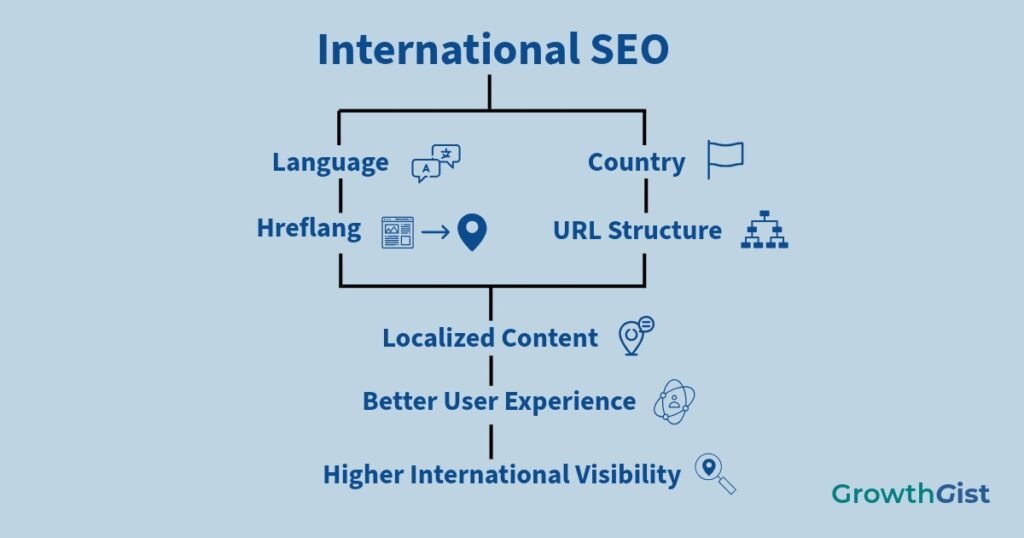
International SEO helps search engines deliver the right content to the right audience by matching your pages with the user’s country and language.
For example, if you have one version of your website for English-speaking users and another for Spanish-speaking users, International SEO helps search engines serve the correct version to each audience.
Although many beginners start by focusing on one country, understanding International SEO becomes valuable as your website grows and attracts visitors from different regions.
Why Is International SEO Important?
As your website expands, visitors may come from different countries, each with unique languages, cultures, and search habits. Simply translating your content is not always enough.
A proper International SEO strategy helps you:
- Reach audiences in multiple countries.
- Improve visibility in international search results.
- Deliver content in the user’s preferred language.
- Increase trust by providing localized experiences.
- Reduce confusion caused by duplicate or similar pages.
Even if you currently target only one country, learning these concepts now can help you prepare for future growth.
Expanding into international markets doesn’t always mean launching dozens of country-specific websites at once. Many successful websites begin by serving one audience well and then gradually create content for additional regions as demand grows. Taking this step-by-step approach makes international expansion more manageable and helps maintain content quality.
💡 Key Takeaway
You don’t need an international website today to benefit from learning International SEO. Understanding its fundamentals now makes future expansion much easier.
How Does International SEO Work?
Search engines use several signals to determine which version of your content should appear for different users.
These signals include:
- Website language
- Country targeting
- URL structure
- Hreflang annotations
- Localized content
- User location
By combining these signals, search engines can better understand who your content is intended for and display the most relevant pages in search results.
Choose the Right URL Structure
One of the first decisions when expanding internationally is selecting a suitable URL structure.
Common options include:
Country-specific domains
example.caexample.uk
Subdomains
uk.example.comfr.example.com
Subdirectories
example.com/uk/example.com/fr/
Each option has its own advantages depending on your business goals, budget, and technical requirements.
For most websites, subdirectories are often easier to manage while still supporting international expansion.
There isn’t a single URL structure that works best for every website. The right choice depends on factors such as your budget, technical resources, long-term goals, and the number of countries you plan to target. Before making any changes, it’s worth thinking about how easily your website can be managed as it continues to grow.
Create High-Quality Localized Content
One common mistake is assuming that direct translation is enough.
People in different countries often use different words, examples, currencies, spellings, and cultural references. Localizing your content makes it feel more natural to the intended audience.
For example, a guide written for readers in India may include pricing in Indian Rupees, while the same guide for readers in the United States would typically use US Dollars.
Creating helpful, localized content is an important part of on-page optimization because it improves user experience and encourages better engagement.
Understand Language and Search Intent
The same topic may be searched differently in different countries.
For example, users in one region may search for “mobile phone,” while others may search for “cell phone.”
Understanding these differences helps you choose keywords that match local search behavior instead of relying on direct translations.
Before creating international content, research the keywords people actually use in each target market.
Use Hreflang Tags Correctly
Hreflang tags tell search engines which language and regional version of a page should be shown to users.
For example, if you have separate English and French versions of the same article, hreflang tags help search engines display the correct page to each audience.
While beginners don’t need to memorize the technical implementation immediately, it’s useful to understand that hreflang plays an important role in International SEO.
If you’d like to learn more about implementing hreflang correctly, Google’s hreflang guidelines provide detailed explanations and examples.
Optimize Technical SEO for International Websites
Technical SEO becomes even more important when managing multiple language or country versions.
Pay attention to factors such as:
- Proper indexing
- XML sitemaps
- Canonical tags
- Website speed
- Mobile friendliness
- Secure HTTPS connections
A technically optimized website helps search engines crawl and understand your international content more efficiently.
As your website expands into multiple languages or regions, managing technical settings can become more challenging. Regular technical reviews help ensure that search engines continue discovering, indexing, and serving the correct pages to users. Paying attention to these details early can prevent larger SEO issues later.
Monitor Performance Regularly
Publishing international content is only the beginning.
Regularly monitor how your pages perform using website analytics and search performance reports. Look for changes in impressions, clicks, rankings, and user engagement across different countries.
Tracking this data helps you identify opportunities for improvement and refine your international SEO strategy over time.
Common International SEO Mistakes to Avoid
Beginners often make a few avoidable mistakes when targeting international audiences.
Some common mistakes include:
- Automatically translating every page without localization.
- Ignoring regional keyword differences.
- Using duplicate content across multiple country pages.
- Choosing an unsuitable URL structure.
- Forgetting to use hreflang annotations.
- Not monitoring international search performance.
- Assuming one version of content works equally well for every country.
Avoiding these mistakes can save time and improve your chances of reaching the right audience.
International SEO is a long-term process rather than a one-time setup. Search behavior, user preferences, and business goals can change over time, so reviewing your international strategy regularly is just as important as creating it. Small improvements made consistently often produce better results than trying to optimize everything at once.
Final Thoughts
Unlike Local SEO, which focuses on improving visibility within a specific city or region, International SEO helps websites reach users in different countries by making content more relevant to their language and location. While it may seem advanced at first, understanding the basics now will make future expansion much easier.
If your long-term goal is sustainable international growth, investing in International SEO can deliver long-lasting organic visibility without relying solely on paid campaigns.
You don’t need to target multiple countries from the beginning. Start by building a strong SEO foundation, creating high-quality content, and understanding your audience. As your website grows, you can gradually implement International SEO techniques to reach a wider global audience with confidence.

GrowthGist was founded by Ishwar Solanki to provide clear, practical, and beginner-friendly content on SEO, blogging, AI tools, productivity, website optimization, and digital growth. The platform helps readers build valuable digital skills and strengthen their online presence through actionable insights and reliable information.