
SEO checklist for beginners is one of the simplest ways to make sure every blog post is properly optimized before publishing. By following a structured process, you can avoid common SEO mistakes and improve your chances of ranking in search results.
That’s where an SEO checklist helps.
Instead of guessing whether you’ve missed something important, you can follow a simple step-by-step process to improve your chances of ranking in search results. This guide covers 15 essential checks every beginner should perform before publishing a blog post.
Why an SEO Checklist Matters
When I first started publishing blog posts, I often focused on writing the content and forgot small but important details such as image optimization, internal links, or meta descriptions. The result was that some articles never performed as well as expected, even when the information was useful. A simple checklist helped me stay consistent and avoid those mistakes.
Many beginners focus only on writing content and forget important SEO elements such as title tags, internal links, image optimization, and search intent.
A checklist helps you:
- Maintain consistency across articles
- Avoid common SEO mistakes
- Improve user experience
- Increase search engine visibility
- Save time during the publishing process
This SEO checklist for beginners helps ensure that important optimization steps are not missed before publishing.
If you’re new to SEO, you should first understand what SEO is and why it matters so you can build a strong foundation for long-term search visibility.
1. Identify Your Primary Keyword
Before writing any article, choose one main keyword that represents the topic.
For example:
- SEO checklist for beginners
- Blog post SEO checklist
- SEO publishing checklist
The keyword should match what users are searching for.
Successful SEO starts with keyword research for beginners, helping you discover the exact terms your audience is searching for online.
2. Understand Search Intent
Ask yourself:
Why is someone searching for this keyword?
Are they looking for:
- Information?
- A tutorial?
- A product?
- A comparison?
Your content should match the user’s intent.
Google prioritizes pages that solve the searcher’s problem quickly and clearly.
Creating content that ranks well requires understanding search intent, ensuring your articles match what users actually want to find.
3. Create a Clear SEO Title
Your title should:
- Include the primary keyword
- Be easy to understand
- Encourage clicks
Example:
Bad:
“Publishing Guide”
Good:
“SEO Checklist for Beginners: 15 Steps Before Publishing Any Post”
If you’re unsure how to optimize titles and headings, this guide on on-page SEO optimization techniques explains the essential steps beginners should follow.
4. Write an Engaging Introduction
The introduction should:
- Explain the problem
- Promise a solution
- Encourage readers to continue
Avoid long, unnecessary background information.
Get to the point quickly.
If you want to improve engagement and readability, this SEO content writing guide explains proven techniques for writing content that keeps readers interested from the first paragraph.
5. Structure Content with Headings
Use headings to improve readability.
Recommended structure:
- H1 (main title)
- H2 (major sections)
- H3 (subsections)
Well-organized content helps both users and search engines understand your article.
6. Optimize Your URL
Keep URLs:
- Short
- Descriptive
- Keyword-focused
Example:
Good:
yourdomain.com/seo-checklist-for-beginners
Bad:
yourdomain.com/post-12345
7. Use Internal Links
Internal links help:
- Users discover related content
- Search engines understand your site structure
- Distribute link authority across pages
For example, an SEO checklist article can naturally link to keyword research, on-page SEO, technical SEO, and content writing guides.
8. Add Relevant External Links
External links improve credibility when pointing to authoritative sources.
For example:
- Google Search documentation
- Google’s SEO Starter Guide
External Link 1:
Google Search Central SEO Starter Guide
External Link 2:
Google Search Central Documentation
Only link to trustworthy and relevant sources.
9. Optimize Images
Before uploading images:
- Compress file sizes
- Use descriptive file names
- Add alt text
Example:
Good alt text:
“SEO checklist for beginners infographic”
Bad alt text:
“image123”
Optimized images improve accessibility and page speed.
10. Check Mobile Friendliness
Most users browse websites on mobile devices.
Ensure:
- Text is readable
- Buttons are easy to tap
- Images scale properly
- Layout works on smaller screens
Mobile usability is a key ranking factor.
Even great content may struggle to rank without strong technical SEO fundamentals such as fast loading speeds and proper indexing.
11. Improve Page Speed
Slow websites can frustrate visitors and increase bounce rates.
Basic improvements include:
- Compressing images
- Using caching
- Minimizing unnecessary plugins
- Choosing quality hosting
Page speed is also an important technical SEO factor.
12. Write a Meta Description
A meta description doesn’t directly improve rankings, but it can increase clicks.
Example:
“Follow this SEO checklist for beginners to optimize every blog post before publishing and improve your chances of ranking higher on Google.”
Keep it around 150–160 characters.
13. Review Content Readability
Ask yourself:
- Are sentences easy to understand?
- Are paragraphs too long?
- Is the article beginner-friendly?
Good readability improves user engagement.
14. Avoid Common SEO Mistakes
Many beginners make mistakes such as:
- Keyword stuffing
- Ignoring internal links
- Publishing thin content
- Forgetting image optimization
- Skipping meta descriptions
Avoiding these issues can significantly improve content quality. So it’s worth reviewing the common SEO mistakes to avoid before publishing new content.
15. Perform a Final SEO Checklist Review
Spending an extra five minutes reviewing a post before publishing can save hours of troubleshooting later. A quick check of your links, formatting, and SEO settings helps ensure that both readers and search engines can easily understand your content.
Following an SEO checklist for beginners consistently can improve content quality over time.
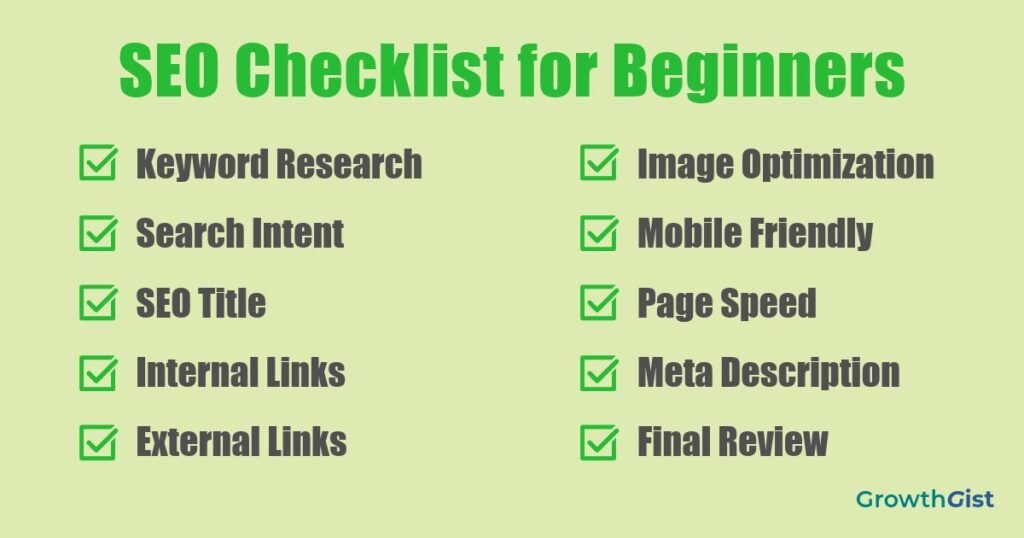
Before publishing:
- Title optimized
- Keyword included naturally
- Search intent satisfied
- Internal links added
- External links added
- Images optimized
- Meta description written
- Mobile-friendly layout checked
- Content proofread
- URL optimized
A final review helps catch small issues before they affect performance.
Remember that SEO is not about achieving perfection on every post. The goal is to follow a consistent process that improves your content over time. Even small improvements made consistently can lead to better rankings, increased traffic, and a better experience for your readers.
Final Thoughts
SEO success doesn’t come from a single optimization technique. It comes from consistently following best practices across every article you publish.
A simple SEO checklist helps ensure you don’t miss important steps and creates a repeatable process that improves content quality over time.
As you continue learning SEO, combine keyword research, search intent analysis, on-page optimization, technical improvements, and quality content creation to build a stronger website and improve your chances of ranking higher in search results.
Once the fundamentals are in place, these proven SEO tips for beginners can help improve rankings and increase organic traffic.

GrowthGist was founded by Ishwar Solanki to provide clear, practical, and beginner-friendly content on SEO, blogging, AI tools, productivity, website optimization, and digital growth. The platform helps readers build valuable digital skills and strengthen their online presence through actionable insights and reliable information.