
Starting a new website is exciting, but getting visitors from search engines takes planning and consistency. Many beginners publish content without a clear SEO strategy and later wonder why their website receives little or no organic traffic.
The good news is that you don’t need hundreds of articles or expensive tools to build a strong SEO foundation. By following a structured strategy from the beginning, you can help search engines understand your website and gradually improve your visibility over time.
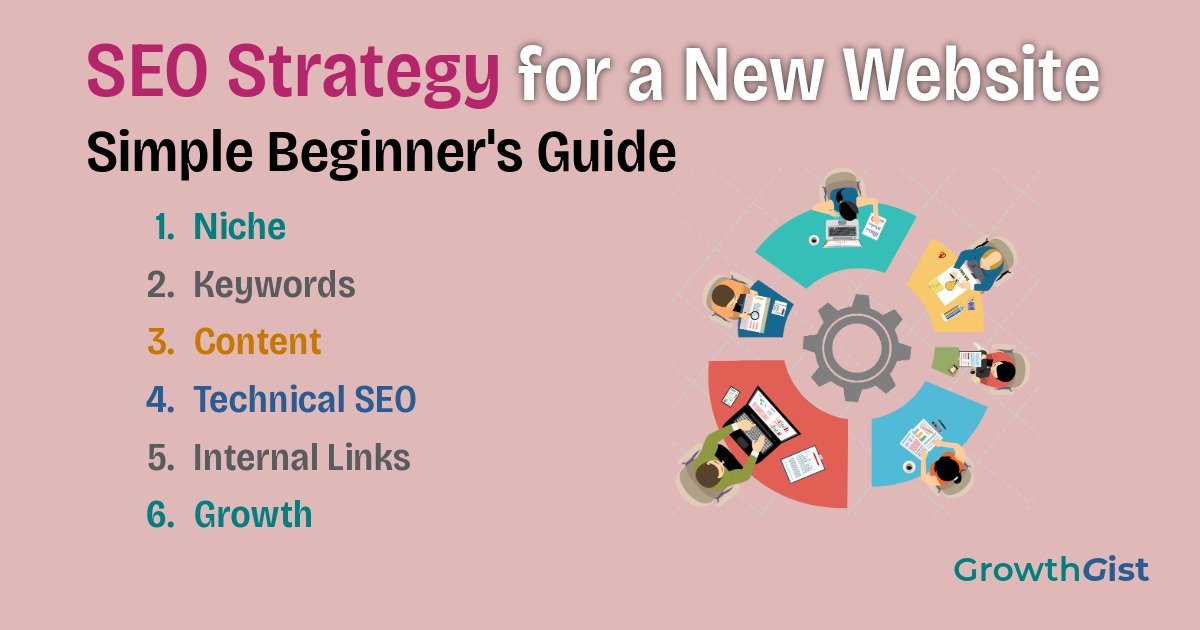
In this guide, you’ll learn a simple SEO strategy for a new website, from choosing the right niche to monitoring your progress after publishing content.
When people launch a new website, it’s natural to feel excited and want quick results. Many beginners spend hours designing pages or publishing articles, only to discover that attracting search traffic takes more than simply putting content online. A clear SEO strategy helps you stay organized, avoid common mistakes, and make better decisions from the very beginning.
What Is an SEO Strategy for a New Website?
An SEO strategy for a new website is a step-by-step plan that helps improve its visibility in search engine results. Instead of randomly creating articles, you focus on publishing content that matches your audience’s needs while making your website technically optimized and easy to navigate.
A good strategy combines keyword research, quality content, technical optimization, internal linking, and regular performance tracking. Together, these elements create a strong foundation for long-term organic growth.
Why Is an SEO Strategy Important?
Think of your SEO strategy as a roadmap rather than a checklist. Some tasks will show results quickly, while others may take months to make a noticeable difference. Having a plan makes it easier to stay consistent because you always know what your next priority should be instead of guessing what to do next.
Launching a website without a strategy often leads to inconsistent content and missed opportunities. Having a clear roadmap allows you to prioritize tasks that can improve your website over time.
An SEO strategy helps you:
- Build topical authority in your niche.
- Publish content with a clear purpose.
- Improve user experience.
- Make your website easier for search engines to understand.
- Measure progress and adjust your approach when needed.
Step 1: Choose a Clear Niche
Building an effective SEO strategy for a new website starts with choosing a clear niche.
A focused website usually performs better than one covering unrelated topics.
For example, instead of writing about every digital topic, choose a specific niche such as SEO, blogging, or productivity. As your website grows, you can gradually expand into closely related subjects.
Having a defined niche also helps readers understand what your website is about.
Step 2: Understand Your Target Audience
Before creating content, think about who will read it.
Ask questions like:
- What problems are they trying to solve?
- What information are they searching for?
- What level of knowledge do they have?
When you understand your audience, it becomes easier to create useful articles that answer real questions.
Step 3: Perform Keyword Research
Keyword research helps you discover what people are searching for online.
Instead of targeting highly competitive keywords immediately, begin with long-tail keywords that have clear search intent and lower competition.
These keywords often give new websites a better opportunity to gain early visibility.
Step 4: Create a Content Plan
Publishing articles without a plan can result in overlapping topics or gaps in your content.
Create a simple content calendar that includes:
- Primary topic
- Target keyword
- Search intent
- Publishing date
- Internal linking opportunities
A structured content plan keeps your website organized and supports long-term growth.
Step 5: Publish Helpful, Original Content
Every article you publish becomes part of your website’s long-term value. Instead of rushing to produce as many posts as possible, focus on creating content that remains useful even months or years after publication. Over time, a collection of well-written articles often performs better than a large number of low-value posts.
Search engines aim to show content that genuinely helps users. This is one of the most important principles of SEO content writing.
Rather than focusing only on keyword placement, create articles that explain concepts clearly, answer common questions, and provide practical guidance.
Original examples, clear explanations, and accurate information improve the overall quality of your content.
Google’s guidance on creating helpful, reliable, people-first content also emphasizes writing for users before search engines.
Step 6: Optimize Every Page
Every published article should be properly optimized. This process is commonly known as on-page SEO.
Review elements such as:
- SEO title
- Meta description
- URL slug
- Heading structure
- Image optimization
- Internal links
Optimizing these elements helps both users and search engines understand your content more effectively.
Step 7: Improve Technical SEO
Even excellent content can struggle if technical issues prevent search engines from accessing your pages efficiently.
Check that your website has:
- HTTPS enabled
- Mobile-friendly design
- Fast loading speed
- XML sitemap
- Proper robots.txt file
- No unnecessary indexing issues
These technical improvements support better crawling and indexing.
Step 8: Build Internal Links
As your website grows, connect related articles naturally.
Internal links help visitors discover more content while allowing search engines to understand the relationship between different pages.
A logical internal linking structure also distributes authority across your website.
Step 9: Earn Quality Backlinks Naturally
Backlinks remain an important ranking factor, but quality matters more than quantity.
Instead of purchasing links or using shortcuts, focus on publishing content that people genuinely want to reference.
You can also earn backlinks by writing guest posts, creating useful resources, and building relationships within your niche.
Step 10: Monitor Your SEO Performance
SEO is an ongoing process rather than a one-time task.
Tip: Review your SEO performance regularly instead of making frequent changes based on short-term ranking fluctuations.
Regularly review metrics such as:
- Organic traffic
- Keyword rankings
- Click-through rate (CTR)
- Impressions
- Indexed pages
Tracking these SEO metrics helps you identify what is working and where improvements are needed.
Common Mistakes to Avoid
Many new websites experience slow growth because of common mistakes that are easy to avoid.
Some common examples include:
- Targeting overly competitive keywords.
- Publishing inconsistent content.
- Ignoring technical issues.
- Using weak internal linking.
- Writing only for search engines instead of readers.
- Expecting immediate rankings.
Avoiding these mistakes gives your website a stronger foundation.
How Long Does SEO Take for a New Website?
SEO results rarely appear overnight.
Many new websites begin seeing gradual improvements within several months, while more competitive topics often require longer.
Consistency matters more than publishing a large number of articles in a short time. Continuing to improve your content, technical SEO, and internal linking can produce better long-term results.
Final Thoughts
Building a successful website starts with a clear strategy rather than chasing quick rankings.
Focus on understanding your audience, creating valuable content, optimizing every page, improving technical SEO, and monitoring your progress regularly. Small improvements made consistently can help your website grow steadily over time.
No website follows exactly the same growth journey. Some pages may start receiving impressions within a few weeks, while others need more time before gaining visibility. Rather than comparing your progress with established websites, measure your success by how consistently you improve your content, technical setup, and overall user experience.
Remember that SEO is a long-term investment. A well-planned SEO strategy for a new website can continue delivering results for years.

GrowthGist was founded by Ishwar Solanki to provide clear, practical, and beginner-friendly content on SEO, blogging, AI tools, productivity, website optimization, and digital growth. The platform helps readers build valuable digital skills and strengthen their online presence through actionable insights and reliable information.