
Voice search has changed the way people find information online. Instead of typing a few keywords into a search engine, many users now ask complete questions using voice assistants on their smartphones, smart speakers, and other connected devices. This shift has encouraged website owners to rethink how they create content and optimize their pages for search.
Although voice search is becoming more common, the goal of SEO remains the same—helping users find the most relevant and useful information. The difference lies in how people phrase their searches. Understanding this behavior can help you improve your website’s visibility and create content that better matches real user queries.
In this beginner’s guide, you’ll learn what Voice Search SEO is, why it matters, how it works, and the practical steps you can take to optimize your website.
What Is Voice Search SEO?
Voice Search SEO is the process of optimizing your website so it can appear in search results when users perform searches using their voice instead of typing.
For example, someone typing into Google may search:
- best beginner SEO guide
The same person using voice search is more likely to ask:
- What is the best beginner’s guide to learn SEO?
Since spoken searches sound more like natural conversations, websites that answer questions clearly and naturally have a better chance of appearing in voice search results.
If you’re new to SEO, it’s helpful to first understand how search engines work and review Google’s SEO Starter Guide before learning how voice queries are handled.
Why Voice Search SEO Matters
If you’ve ever asked your phone something like “What’s the weather today?” or “How do I boil pasta?”, you’ve already used voice search. As more people become comfortable speaking to their devices, websites that answer questions naturally have a better chance of connecting with those users.
Voice-enabled devices continue to become part of everyday life. People often use voice search when they need quick answers while driving, cooking, shopping, or using their phones hands-free.
Optimizing for voice search offers several benefits:
- Improves your chances of appearing in conversational searches.
- Helps you target long-tail keywords naturally by understanding how people ask questions in real conversations.
- Supports local businesses by improving visibility for nearby searches.
- Encourages you to create content that directly answers users’ questions.
How Voice Search Works
When someone asks a question through a voice assistant, the request is converted into text using speech recognition technology. The search engine then analyzes the query, identifies the user’s intent, and returns the most relevant answer.
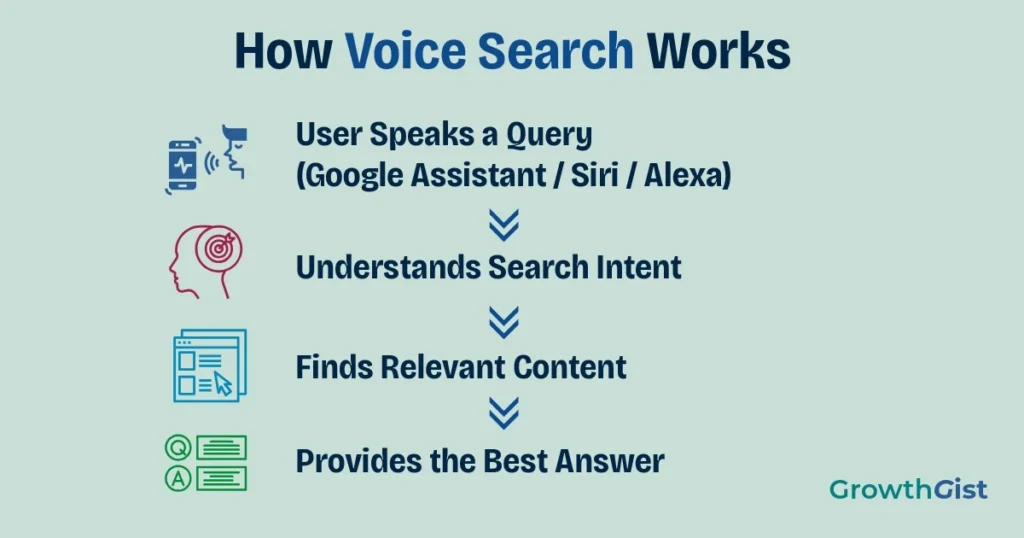
Instead of matching only keywords, modern search engines also consider factors such as:
- Search intent
- Content relevance
- Website authority
- Page experience
- Mobile usability
- Content freshness
This is why creating helpful, accurate, and well-structured content remains essential.
Voice Search vs Traditional Search
Although both use the same search engines, users interact with them differently.
| Traditional Search | Voice Search |
|---|---|
| Short keywords | Natural questions |
| Usually typed | Spoken aloud |
| Often fragmented | Complete sentences |
| Focuses on keywords | Focuses on intent |
| Multiple search refinements | Usually expects an immediate answer |
You don’t need to create separate articles for voice search and traditional search. In most cases, a well-written page that explains a topic clearly and answers common questions can serve both audiences effectively.
How Voice Search Changes Keyword Research
Voice searches usually contain longer and more conversational phrases.
Instead of targeting only:
- technical SEO
You may also target phrases such as:
- What is technical SEO?
- How does technical SEO work?
- Why is technical SEO important?
This doesn’t mean you should stop targeting traditional keywords. Instead, include natural language variations throughout your content where they fit naturally.
Tips to Optimize Your Website for Voice Search
Create Content Around Real Questions
Many voice searches begin with words like:
- What
- How
- Why
- When
- Where
Including question-based headings followed by clear answers can make your content more useful for both readers and search engines.
Write in a Natural Tone
People don’t speak the way they type.
Instead of forcing keywords repeatedly, write as if you’re explaining the topic to a beginner. Clear, conversational writing often aligns better with voice search queries.
A conversational writing style improves readability because it feels closer to the way people communicate in everyday life. Instead of trying to sound overly technical, focus on explaining concepts clearly. Readers are more likely to trust content that is easy to understand without sacrificing accuracy.
Target Long-Tail Keywords
Long-tail keywords usually reflect how people speak in everyday conversations.
For example:
Instead of:
- SEO
Consider:
- How can beginners improve their website’s SEO?
These longer phrases often have clearer search intent and can attract more relevant visitors.
Improve Mobile Friendliness
A large percentage of voice searches happen on mobile devices.
Make sure your website:
- Loads quickly
- Uses responsive design
- Has readable text
- Is easy to navigate
A positive mobile experience goes beyond responsive design. Visitors should be able to read text comfortably, tap buttons without difficulty, and move through the website without unnecessary interruptions. Small usability improvements can make a noticeable difference in overall user satisfaction.
A better mobile experience benefits every visitor, not just voice search users.
Focus on Fast Page Speed
Users expect quick answers.
Slow-loading pages may reduce user satisfaction and affect search performance.
Improving images, reducing unnecessary scripts, and optimizing website performance all contribute to a faster experience.
Website speed also influences how long visitors stay on a page. If users have to wait too long for content to appear, they may leave before interacting with your website. Regularly monitoring your Core Web Vitals helps identify performance issues before they affect the user experience.
Structure Your Content Clearly
Well-organized articles help both readers and search engines understand your content.
Use:
- Descriptive headings
- Short paragraphs
- Bullet points
- Numbered lists
- Tables where appropriate
A well-organized article guides readers from one idea to the next without confusion. Dividing information into logical sections makes complex topics easier to follow and encourages visitors to spend more time exploring the page from beginning to end.
Following good SEO copywriting practices also improves readability without sacrificing optimization.
Strengthen Your Local SEO
Many voice searches have local intent.
Examples include:
- Best coffee shop near me
- Pharmacy open now
- SEO agency near me
Keeping your business information accurate and consistent across the web can improve your visibility for location-based searches.
It’s easy to assume that voice search requires a completely different SEO strategy, but that’s rarely the case. Small improvements to your existing content are often enough to make it more helpful for conversational searches.
Common Voice Search SEO Mistakes
Beginners sometimes make mistakes that reduce the effectiveness of their optimization efforts.
Avoid these common issues:
- Stuffing conversational keywords unnaturally.
- Ignoring mobile usability.
- Using outdated information.
- Overlooking page speed improvements.
- Writing only for search engines instead of real users.
Remember that voice search optimization should improve the reader’s experience rather than simply targeting another ranking opportunity.
Does Voice Search Affect Featured Snippets?
Yes, in many cases.
Search engines often use concise, well-written answers from high-quality pages when responding to voice queries. While there is no guarantee that your content will be selected, providing accurate and direct answers can increase your chances.
This is one reason why organizing your content with clear headings and informative paragraphs is so important.
Is Voice Search SEO Different from Regular SEO?
Not entirely.
Voice Search SEO builds upon traditional SEO principles rather than replacing them.
The same foundations still matter:
- Helpful content
- Good user experience
- Mobile optimization
- Fast loading pages
- Strong internal linking
- Clear website structure
Voice search simply encourages you to write content that better reflects how people naturally ask questions.
Best Practices for Voice Search SEO
As you continue improving your website, keep these practices in mind:
- Understand user intent before writing.
- Include conversational keywords naturally.
- Answer common questions clearly.
- Improve page speed.
- Optimize for mobile users.
- Publish trustworthy information by following E-E-A-T principles.
Following these practices helps create content that serves both voice search users and traditional search visitors.
💡 Key Takeaway
As search technology continues to evolve, the way people discover information will continue to change. However, creating helpful, user-focused content remains one of the most effective SEO strategies, regardless of how people choose to search.
Final Thoughts
SEO for Voice Search isn’t about learning an entirely new form of optimization. Instead, it’s about adapting your content to match the way people naturally communicate.
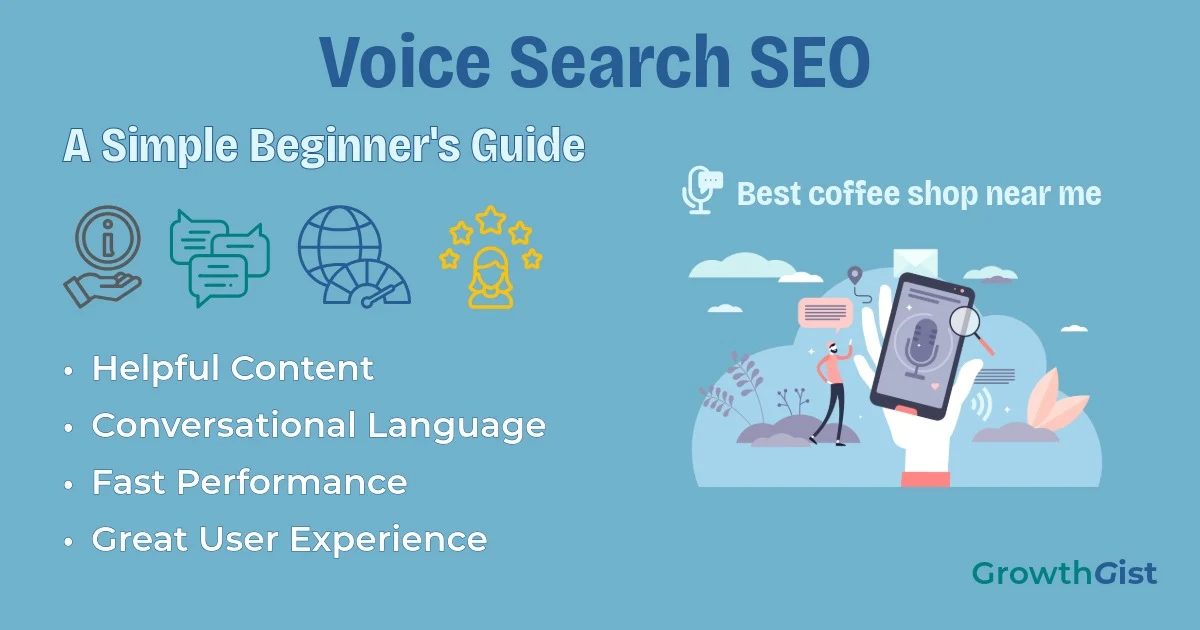
As voice-enabled devices continue to evolve, websites that prioritize helpful information, conversational language, fast performance, and excellent user experience will be better positioned to succeed.
Whether you’re just beginning your SEO journey or improving an existing website, incorporating voice search best practices into your overall SEO strategy can make your content more accessible, useful, and future-ready.

GrowthGist was founded by Ishwar Solanki to provide clear, practical, and beginner-friendly content on SEO, blogging, AI tools, productivity, website optimization, and digital growth. The platform helps readers build valuable digital skills and strengthen their online presence through actionable insights and reliable information.